
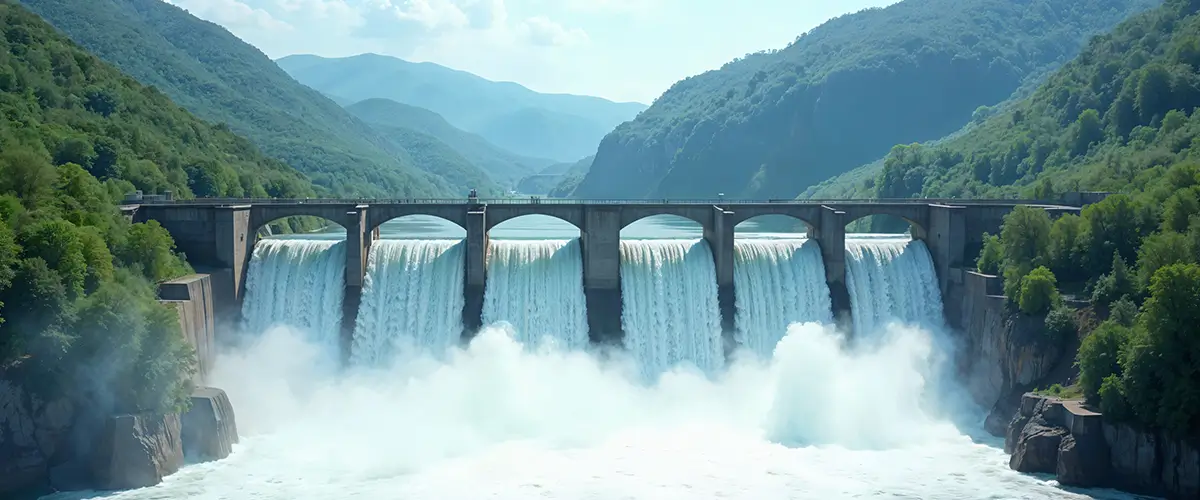
Hydropower is increasingly being re-evaluated not just as a legacy renewable resource, but as a strategic flexibility and energy security asset within modern energy systems. While capacity additions are more modest compared to wind and solar, hydropower’s ability to provide dispatchable, long-duration flexibility gives it a unique and increasingly valuable role.
Quantitatively, hydropower remains one of the largest renewable energy sources globally, with installed capacity exceeding 1,300 gigawatts. In many regions, hydropower contributes a significant share of renewable energy supply and provides a backbone for system stability. Pumped storage hydropower, in particular, represents a large share of global energy storage capacity, far exceeding battery storage on an energy-duration basis.
Hydropower’s value lies in its ability to respond rapidly to changes in system conditions. Reservoir-based hydro can ramp output quickly, absorb excess renewable generation, and provide multi-hour to multi-day balancing. This makes it uniquely suited to complement variable wind and solar, reducing curtailment and improving overall system efficiency.
From a quantitative system perspective, hydro storage capacities often represent weeks or months of potential energy, providing seasonal balancing that short-duration storage technologies cannot replicate. This seasonal flexibility is increasingly valuable as renewable penetration rises and weather-driven variability becomes more pronounced.
Hydropower also contributes to energy security by reducing reliance on imported fuels. In regions with significant hydro resources, domestic hydropower reduces exposure to fuel price volatility and supply disruptions. This has macroeconomic implications, improving trade balances and reducing vulnerability to external shocks.
Investment dynamics in hydropower are evolving. While greenfield large-scale projects face environmental, social, and regulatory constraints, modernization and uprating of existing assets offer attractive returns. Efficiency improvements, digital control systems, and turbine upgrades can materially increase output and flexibility without new reservoir development.
Pumped storage projects are receiving renewed attention as system flexibility requirements grow. These assets provide large-scale, long-duration storage, enabling greater integration of wind and solar. Financial models increasingly value pumped storage for its capacity payments, ancillary services, and arbitrage opportunities rather than just energy generation.
From an industrial energy perspective, hydropower-backed energy systems offer high reliability and low emissions intensity. Energy-intensive industries in hydro-rich regions benefit from structurally lower and more stable energy costs, supporting long-term competitiveness.
Over the coming years, hydropower’s strategic importance is likely to increase, not necessarily through massive capacity additions, but through its role as a system stabilizer. As energy systems become more complex and variable, hydro’s flexibility, storage capability, and security benefits position it as a critical component of a resilient, low-carbon energy architecture.