
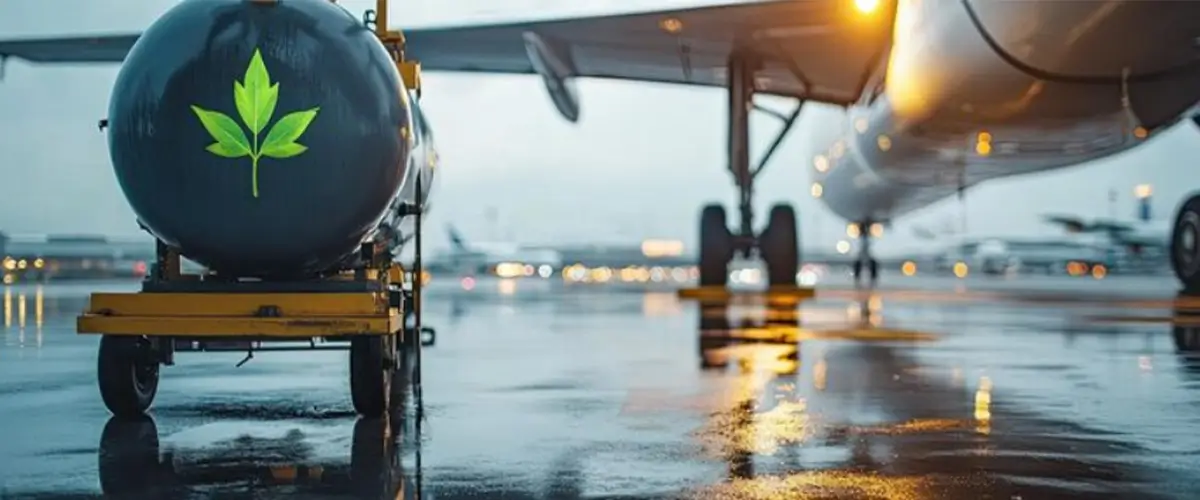
Sustainable Aviation Fuel has moved beyond its early-stage status as a niche compliance solution and is rapidly becoming a strategic pillar of airline decarbonization strategies and fuel supply planning. While SAF currently represents less than 1% of total global jet fuel consumption, the pace of policy-driven mandates, voluntary corporate commitments, and airline offtake agreements is accelerating the transition from pilot-scale deployment to early commercial scaling.
Global jet fuel demand exceeds 300 million tonnes per year, implying that even modest SAF blending mandates create structurally large demand signals. Mandates in key aviation markets are driving minimum SAF blending requirements that ramp over time, creating a clear floor for SAF demand growth. At current mandate trajectories, SAF demand is expected to scale into the tens of millions of tonnes per year over the next decade, compared to low single-digit million tonne volumes today.
The supply side remains the primary bottleneck. Current SAF production is dominated by hydro-processed esters and fatty acids (HEFA) pathways, using waste oils, used cooking oil, and animal fats as feedstocks. These feedstocks are structurally constrained and increasingly contested across multiple biofuel markets, including renewable diesel. This creates upward pressure on feedstock prices and limits scalable growth through HEFA alone.
As a result, attention is shifting toward next-generation SAF pathways, including alcohol-to-jet, gasification with Fischer-Tropsch synthesis, and power-to-liquids using green hydrogen and captured CO₂. These pathways offer theoretically larger feedstock pools but remain at early commercial maturity, with higher capital intensity and technology risk.
From a quantitative standpoint, SAF production costs remain significantly higher than conventional jet fuel, often by a factor of two to five depending on pathway and feedstock. This cost gap is currently bridged through a combination of policy incentives, mandates, and corporate willingness to pay for decarbonization. Airlines increasingly embed SAF procurement into long-term fuel strategies, treating it as a structural cost rather than a discretionary premium.
Airline offtake agreements have become a central de-risking mechanism for SAF projects. Long-term offtakes with major carriers and large corporate travel buyers provide revenue visibility and enable project financing. These offtakes increasingly include escalating volume commitments, reflecting growing confidence in SAF availability and regulatory durability.
For fuel producers and investors, SAF represents a structurally attractive growth market but one characterized by feedstock competition, technology risk, and evolving policy frameworks. The strategic winners are likely to be players that secure advantaged feedstock positions, develop multi-pathway technology portfolios, and integrate SAF into broader refining and fuel distribution networks.
Over time, SAF is likely to transition from a compliance-driven niche to a core component of aviation fuel supply. However, scaling remains contingent on resolving feedstock constraints, accelerating next-generation technologies, and maintaining durable policy support.